
Prosthodontics
Removable dentures
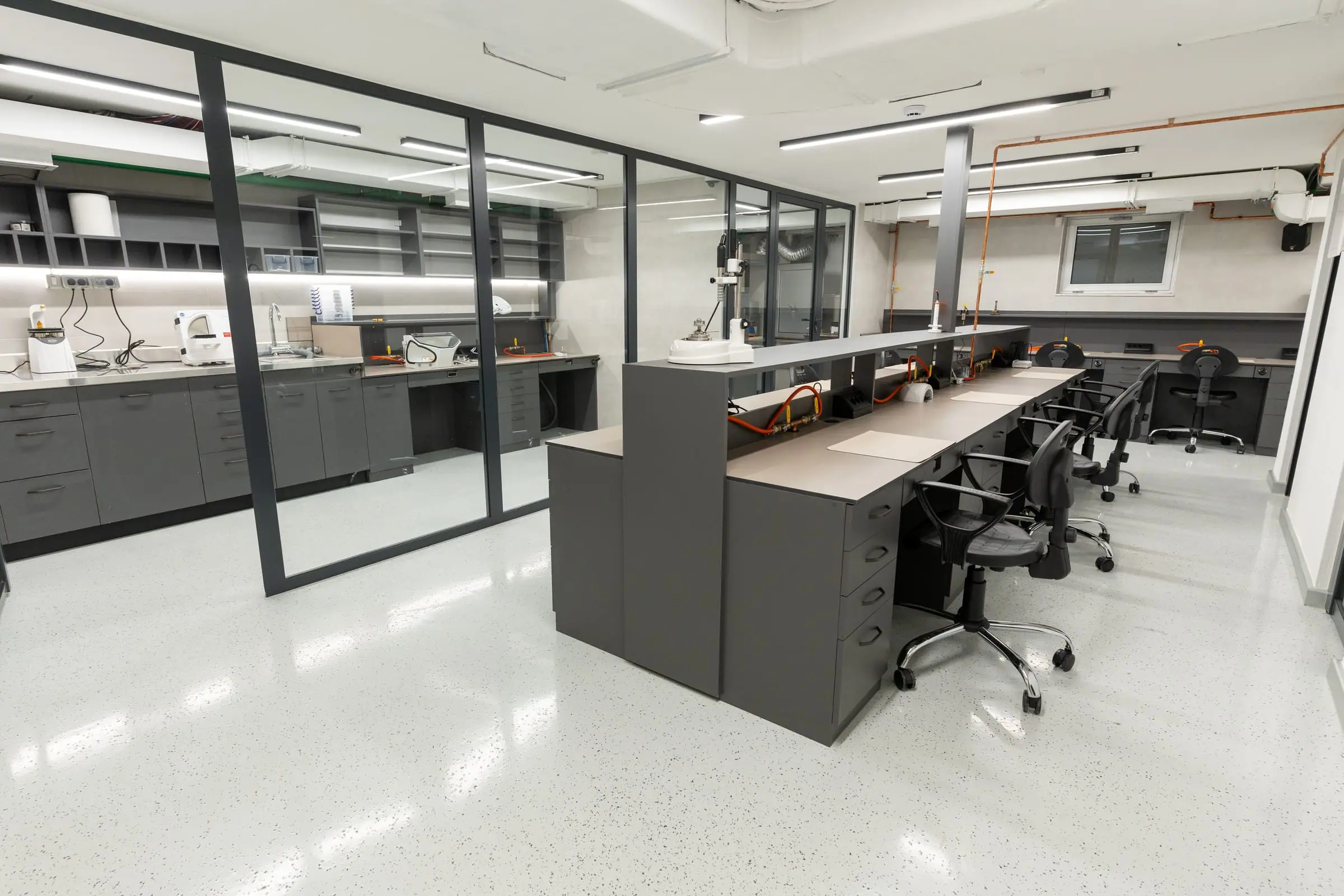
When a fixed restoration is not possible or not wanted, a removable denture restores the function and appearance of your teeth – and is easy to take out for cleaning. We make it in our own laboratory, so adjustments are quick.
When is a removable denture a good choice?
A removable denture is the solution when several or all teeth are missing and implants are not possible, not wanted or planned for later. It is simpler and more affordable than fixed restorations, and modern dentures look natural and are more comfortable than in the past.
Types of removable dentures
- Complete (full) dentures – for a jaw with no teeth; a pink acrylic base that matches the colour of the gums, or one reinforced with a metal framework. The upper denture covers the palate.
- Partial dentures – when one or more teeth are missing; they attach to the remaining teeth. Modern versions have retention elements that are not visible.
- Combined restoration – part fixed bridge, part denture, joined by special attachments.
- Bar-retained overdenture – a removable denture without palate coverage, attached to four implants; considerably more stable than a conventional denture.
The procedure
- 01
Specialist consultation
An examination of your mouth, a conversation about what you would like to achieve and, if needed, an X-ray or 3D CBCT scan – all in the clinic, in one place. Based on this, you receive a treatment plan and a quote.
- 02
Preparation
Before a partial denture, the remaining teeth are treated; badly damaged teeth sometimes need to be extracted.
- 03
Impressions and try-in
Impressions are taken, the bite is recorded and the tooth set-up is tried in before the denture is finished.
- 04
Fitting and adjustment
We adjust the denture at follow-up appointments until it is comfortable.
Getting used to it and aftercare
In the first few weeks it is normal to need time to get used to speaking and chewing with a denture. Start with softer foods and chew evenly on both sides. Clean your denture every day with a brush and a denture cleaner rather than abrasive toothpaste. Sore spots and instability are resolved with an adjustment – just get in touch; thanks to our own laboratory, this is usually quick.
Questions & answers
Frequently asked questions
How long does it take to make a removable denture?
It involves several visits (impressions, bite registration, try-in, fitting). The exact number depends on the type of denture and the condition of your mouth.
Can a denture be stabilised?
Yes – a bar-retained or implant-supported denture is considerably more stable than a conventional one. We assess the options at your consultation and on a 3D scan.
What if my denture rubs?
Come in for a check-up. We carry out adjustments in our own laboratory, so they are usually quick.
How often does a denture need to be replaced or relined?
The bone and gums change over time, so a denture occasionally needs to be relined or replaced. We assess when this is necessary at your regular check-ups.
Related services
Fixed dentures
All-on-4 / All-on-6 and the Toronto bridge – fixed teeth on implants, with no denture to take out.
All-on-4 / All-on-6
A complete fixed arch of teeth on 4 or 6 implants – for a toothless jaw or for teeth that need to be replaced.
Dental implants
A fixed replacement for one, several or all teeth – B&B Dental implants, 3D planning and crowns from our in-house laboratory.
The first step
Book a specialist consultation.
Your appointment includes a free specialist examination of your mouth, a consultation with the dentist, a treatment plan and a quote for the treatments you need, tailored to your wishes and circumstances.